Generational Fluency is the ability to navigate generational differences at work with empathy, agility, and strategic intent — not by bending to every preference, but by understanding other points of view well enough to reach shared progress. In the Philippines, where family, hierarchy, and community shape workplace dynamics, it is essential: it decides whether multigenerational teams collaborate or collide.
As you walk through any workplace, you will see it — different generations working side by side. On the surface, it looks simple enough. Everyone goes about their day, quietly and steadily. But the truth is, when people work together, they don't just coexist. They either collaborate or collide.
Why generational dynamics matter in the workplace
Companies must pay close attention to generational dynamics because they can make or break an organization. The company will grow if its people thrive. And they will thrive under circumstances where there is respect and trust, where they have a voice, where they find purpose and can meaningfully contribute. All generations aspire to these same values. But there will be differences in perspectives and preferences, either in the way they interpret a value or in the way that they manifest their beliefs at work.
When cross-generational teams work in harmony, they turn diversity into advantage.
They draw strength from each other's experiences, share ideas openly, give feedback respectfully, and hold each other accountable to shared goals. This is demonstrated by openness in sharing and accepting ideas, in expressing their thoughts or providing feedback, and in setting and living up to work expectations. This is where collaboration sparks innovation, growth, and creative problem-solving.
Without openness and understanding, tensions will occur. New ideas may sound threatening to those who hold on to tradition and legacy, feedback may feel like criticism and judgment, and upholding boundaries for work-life balance may sound like an excuse to sidestep commitments, or a lack of urgency.
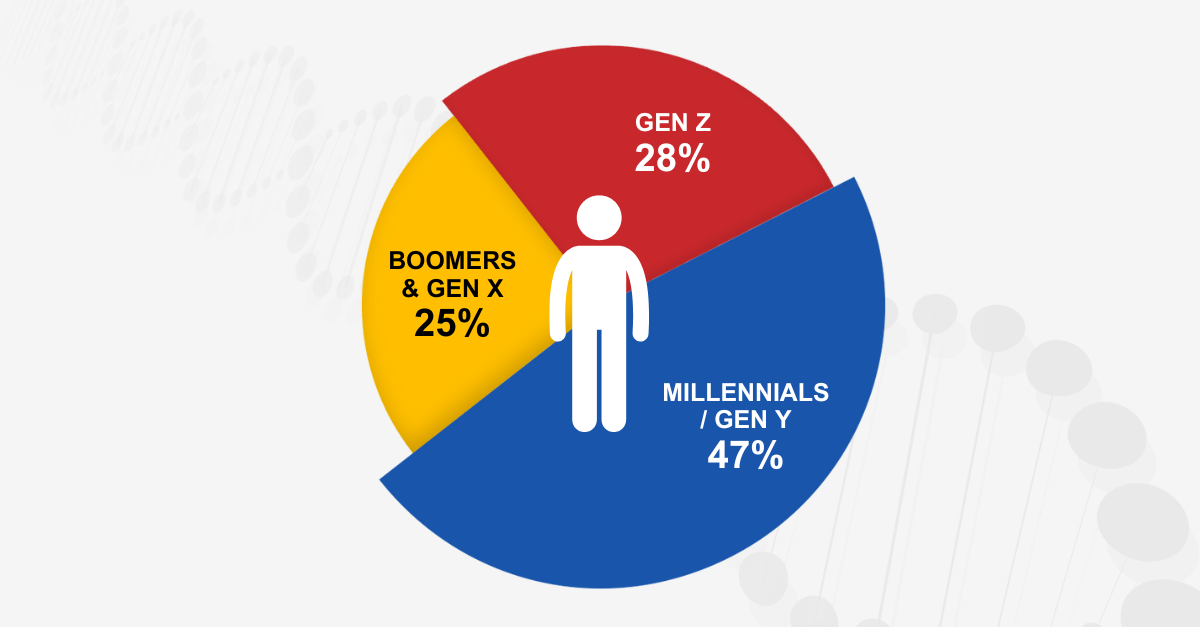
As the generation mix in the workforce becomes more diverse, these tensions are becoming more prevalent. Organizations now find themselves needing a new skill to bridge the gaps in a multigenerational workforce: Generational Fluency.
What is Generational Fluency?
Generational Fluency is the ability to appreciate the uniqueness of each generation — not to bend to each other's whims, but to see how understanding a different point of view and preference might give rise to a win-win solution, a compromise, and shared progress.
It is the art of navigating generational differences with empathy, agility, and strategic intent. Importantly, it goes beyond knowing the stereotypes (e.g., Boomers value loyalty, Gen Z wants flexibility) and instead focuses on:
- Appreciating and understanding the experiences that shaped each generation's perspective
- Recognizing behavioral patterns in communication, motivation, and decision-making
- Adapting leadership and organizational practices to meet diverse generational needs
- Developing inclusive environments where all generations feel seen, heard, and valued
It is not about satisfying preferences — it is about developing a climate where multigenerational teams can better collaborate, co-create, and cooperate, so that everyone thrives and the organization grows.
Why Generational Fluency is a strategic skill, not a buzzword
Generational Fluency is not another fashionable buzzword. It is a strategic enabler — one that organizations must urgently cultivate to unlock engagement, performance, and innovation across their workforce. And in the Philippines, where family, hierarchy, and community deeply influence workplace dynamics, Generational Fluency is not optional — it is essential.
Through Project Alphabet, our study of Filipinos across generations, we have been listening to every generation's voice — from Gen Z's calls for empathy, to Millennials' push for growth, to Gen X's need for balance, to Boomers' desire for stability. The study highlights the values these generations share, but without Generational Fluency, that common ground gets lost in translation.
Three signs you may have a Generational Fluency gap
- Feedback loops stall. Messages get taken as personal, not professional.
- Meetings end polite, but unresolved. No one is sure who should decide.
- Good people leave quietly, not for pay, but because they don't feel understood.
Three small shifts to start building Generational Fluency
- Explain the why, not just the what. People anchor better when they understand context.
- Highlight the value of what already exists before proposing change. It honors legacy while making space for progress.
- Adjust recognition. Some want public thanks; others value private acknowledgment or growth opportunities.
Turning generational diversity into a competitive edge
Generational Fluency is not about sorting people into generational labels — it is about seeing each individual, beyond age, to understand what drives, inspires, and challenges them. This is the missing skill in Filipino workplaces, and it must take priority. And organizations that make the shift convert generational diversity into a real competitive edge.
We continue to share findings from Project Alphabet — insights and stories on how leaders can start practicing Generational Fluency in everyday moments.
This article is part of the insights series from Project Alphabet, the study of Filipinos across generations by Acumen Strategy Consultants, a Filipino-led consulting company.
Frequently asked questions
What is Generational Fluency?
Generational Fluency is the ability to navigate generational differences at work with empathy, agility, and strategic intent. It goes beyond stereotypes to understand the experiences that shaped each generation, recognize patterns in how people communicate and make decisions, adapt leadership practices, and build workplaces where every generation feels seen, heard, and valued.
Why does Generational Fluency matter in Philippine workplaces?
In the Philippines, where family, hierarchy, and community deeply influence workplace dynamics, Generational Fluency is essential rather than optional. Project Alphabet — a study of Filipinos across generations by Acumen Strategy Consultants, a Filipino-led consulting company — highlights the values every generation shares. Without Generational Fluency, that common ground gets lost in translation, and multigenerational teams collide rather than collaborate.
What are the signs of a Generational Fluency gap?
Three signs suggest a Generational Fluency gap. Feedback loops stall because messages get taken as personal, not professional; meetings end polite but unresolved, with no one sure who should decide; and good people leave quietly — not for pay, but because they don't feel understood.
How can organizations start building Generational Fluency?
Organizations can start building Generational Fluency with three small shifts. Explain the why, not just the what, because people anchor better when they understand context; highlight the value of what already exists before proposing change; and adjust recognition, since some people want public thanks while others value private acknowledgment or growth opportunities.
← Back to Insights